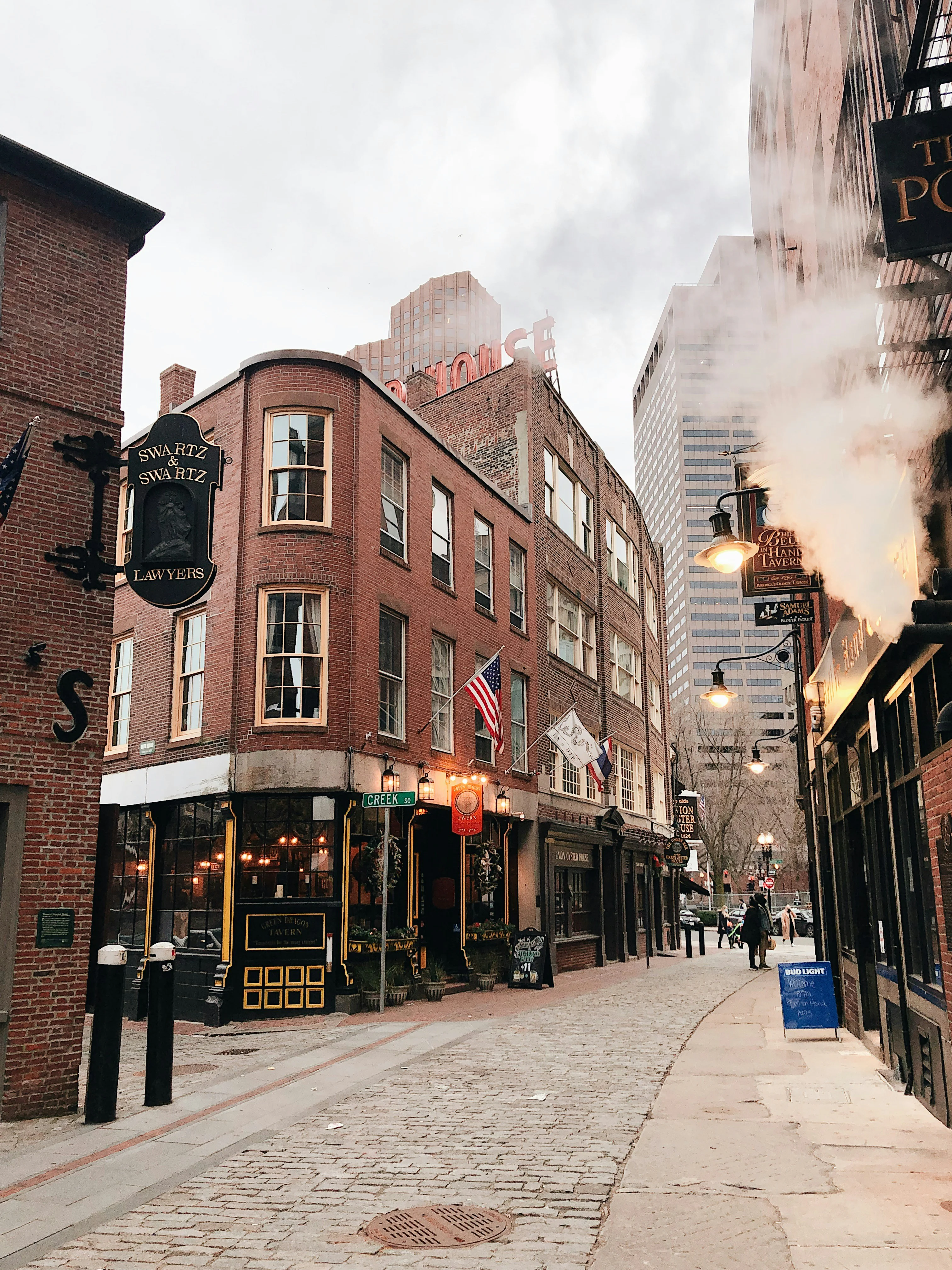
This program will take students on an immersive journey through Boston, exploring how neighborhoods are shaped by culture, history, food, and community. Through hands-on experiences, local conversations, and neighborhood exploration, students will engage with the people and stories that define different parts of the city. By connecting migration, identity, entrepreneurship, and public life, this program helps students better understand what makes a place feel like home.
What makes a neighborhood feel like home?
Day 1: Arrival in Boston
Students arrive in Boston and settle into their new surroundings.
After checking in, the group gathers for a brief introduction to the program and what lies ahead. It is a calm start that allows students to rest, connect, and begin thinking about the communities they will explore in the days to come.
Day 2: Food, Culture, and Storytelling
Students begin their exploration of Boston through food and storytelling.
At Nibble Kitchen, they take part in a hands-on cooking experience rooted in Brazilian cuisine while learning how food can carry identity, history, and personal narratives across borders. This experience highlights how immigrant communities contribute to the cultural fabric of a neighborhood.
Later, students take part in a classic New England activity with candlepin bowling, followed by a shared meal. The day blends cultural exchange with local tradition, offering insight into how communities build connection through both heritage and everyday experiences.
Day 3: Community, Food Access, and Entrepreneurship
Students explore how neighborhoods support resilience and opportunity.
At Eastie Farm, they participate in an urban agriculture workshop, learning about food access, sustainability, and the role of community-driven initiatives in addressing local challenges. This hands-on experience connects environmental awareness with social impact.
The day continues with a dumpling-making workshop and a visit to a food business incubator, where students learn how entrepreneurs, particularly from underrepresented communities, build businesses that reflect their identities and serve their neighborhoods.
In the evening, students experience Boston’s energy at a Red Sox game, seeing how sports can bring people together and create a shared sense of belonging.
Day 4: Migration, Identity, and Community Spaces
Students dive deeper into Boston’s history as a city shaped by migration.
At the Museum of African American History and the Vilna Shul, students explore the experiences of African American and Jewish communities, learning how history, movement, and identity shape neighborhoods over time.
Through guided experiences and discussions, students consider how cultural institutions preserve stories and create spaces for belonging. Time spent in local gathering spaces further highlights how neighborhoods evolve while maintaining connections to their past.
Day 5: Diaspora, Entrepreneurship, and Cultural Expression
Students focus on the Armenian community in Boston, exploring how diaspora communities maintain identity while adapting to new environments.
Through a museum visit, community center experience, and local market exploration, students learn how businesses, cultural spaces, and shared traditions help sustain a sense of home across generations.
A traditional dance workshop brings these ideas to life through movement and expression, showing how culture continues to be practiced, shared, and celebrated.
Day 6: Neighborhood Identity and Everyday Life
Students explore Boston’s North End, one of the city’s most historic neighborhoods, through a guided food and history walk.
As they sample local foods and walk through the streets, students learn about waves of immigration and how communities have shaped the neighborhood over time. This experience highlights how food, place, and memory are deeply connected.
Later, a boat ride along the Charles River offers a broader view of the city, helping students reflect on how geography, infrastructure, and history come together to shape Boston’s identity.
Day 7: Reflection and Journey Home
On the final day, students prepare to return home, taking time to reflect on all they have experienced.
They leave Boston with a deeper understanding of how neighborhoods are formed through people, stories, traditions, and shared spaces. As they return, they carry new perspectives on what it means to belong and how communities create a sense of home.
 Uncategorized