This program will take students on a transformative journey through Norway, exploring the relationship between environmental sustainability and economic development. Through immersive experiences in cities, natural landscapes, and local communities, students engage with real-world examples of how Norway balances innovation, conservation, and quality of life. By connecting environmental responsibility with economic decision-making, this program helps students better understand how societies can build sustainable futures.
Where do the environment and the economy intersect?
Day 1–2: Arrival in Oslo and First Impressions
After traveling to Norway, students arrive in Oslo and begin settling into their new surroundings.
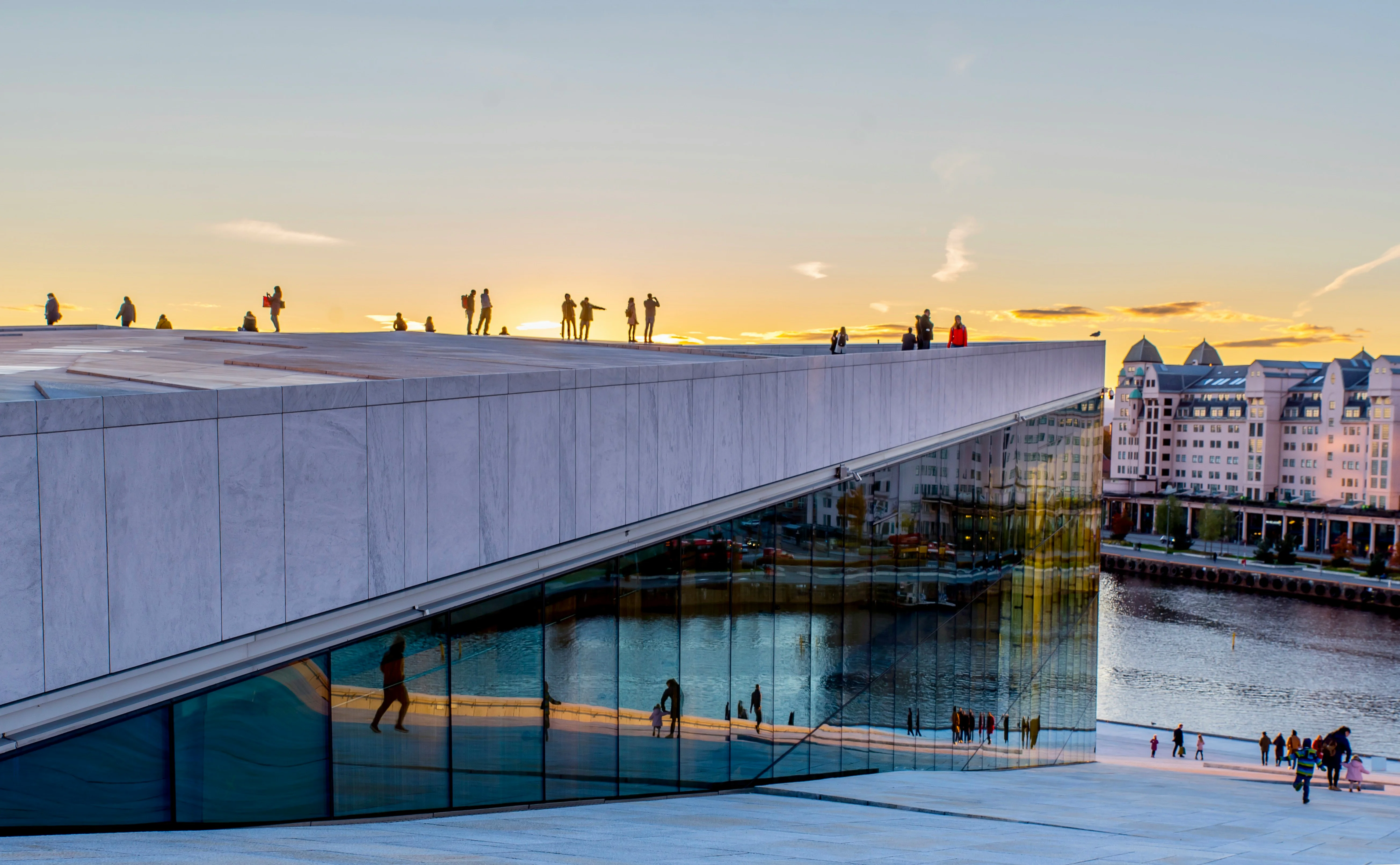
Their first evening introduces them to Norwegian culture through a traditional meal, followed by a walk along the Oslo Opera House, where they can take in panoramic views of the city and waterfront. It is a calm and reflective start that helps students orient themselves and begin thinking about the relationship between urban design and natural space.
Day 3: Green Cities and Life on the Fjord
Students begin exploring how Oslo integrates nature into urban life through a guided tour of the city’s green spaces. Parks, waterfronts, and public areas highlight how environmental priorities are built into everyday city living.
In the afternoon, students travel along the Oslofjord by electric boat, observing how the city interacts with its surrounding waterways. Time along the harbor allows them to experience daily life in Oslo and see how recreation, commerce, and sustainability coexist.
Day 4: Taking Action on Environmental Challenges
Students actively participate in environmental stewardship through a fjord clean-up initiative, working directly on the water and along the shoreline. This hands-on experience connects environmental issues to tangible action.
Later, at the Climate House, students engage in interactive exhibits and discussions about climate science, global challenges, and potential solutions. The day encourages students to think critically about their role in addressing environmental issues.
Day 5: Peace, Innovation, and Sustainable Communities
Students explore the Nobel Peace Center, where they examine global efforts toward peace and the connections between stability, cooperation, and sustainable development.
In the afternoon, they visit a forward-thinking community outside Oslo focused on low-emission urban development. Through conversations with local leaders and innovators, students learn how cities are being designed to reduce environmental impact while supporting economic growth and quality of life.
Day 6: Sustainable Living on the Land
Students step into rural Norway with a visit to a working farm.
They engage directly in daily tasks such as planting, composting, and food preparation, gaining insight into sustainable agriculture and local food systems. Sharing a meal made from fresh ingredients reinforces the connection between land, labor, and consumption.
The experience highlights how sustainability is not just a concept but a way of life.
Day 7: Forests, Resources, and Traditional Practices
At the Norwegian Forestry Museum, students explore the role of forests in Norway’s economy and cultural identity.
Through interactive activities, they learn about traditional practices such as logging and timber floating, as well as how these industries have evolved to balance economic needs with environmental protection. The day provides a deeper understanding of how natural resources are managed responsibly.
Day 8: Circular Economy and Everyday Sustainability
Students explore sustainability in daily life through a foraging experience, learning how to identify and use edible plants in the wild. This activity highlights a closer relationship with nature and resource use.
Later, they participate in an upcycling workshop, transforming materials into new products and exploring how waste can be reduced through creativity and innovation. These experiences introduce students to the principles of a circular economy.
Day 9: Indigenous Perspectives and Urban Innovation
Students are introduced to Sámi culture through storytelling, traditions, and perspectives that emphasize a deep connection to land and sustainability.
In the afternoon, they explore one of Oslo’s most innovative urban redevelopment areas, where former industrial spaces have been transformed into sustainable, community-focused neighborhoods. This final day brings together the program’s themes of environment, economy, and design.
Day 10: Journey Home
Students depart Norway with new perspectives on how environmental and economic systems are interconnected.
They return home with a deeper understanding of sustainability in practice and the ways individuals and communities can contribute to a more balanced future.
 Uncategorized