In this immersive excursion to Northern Thailand, students participate and learn about the region’s living traditions — cooking from scratch at a local market-based culinary school, joining artisan workshops in umbrella and pottery villages whose crafts span centuries, and walking the grounds of sacred temples that range from jungle shrines to bold contemporary reinventions in white and cobalt. Meanwhile, they’ll confront the pressures of rapid development on urban and village communities first-hand by opening dialogue with non-governmental organizations that promote just enterprise practices and social impact for various populations near Chiang Mai.
Travelers will enjoy getting their hands-dirty for a good cause in the Mae Sa Valley and beyond — meeting with rescued elephants, engaging with fair-trade coffee farming with the Black Lahu community, and repurposing waste fibers to create art and awareness for elephant conservation efforts — all while reflecting on matters to a civilization and what it costs to protect it. Exploring sporting and night markets, traversing in Tuk Tuks, enjoying traditional Thai cuisine, plunging into waterfalls and hot springs and visiting temples — both ancient and contemporary — round out a program designed to return students not just with vivid memories, but with a more rigorous and humane way of thinking about culture, conservation, and change.
How does a contemporary nation with an ancient past balance preservation & progress?
Day 1–3: Arrival in Chiang Mai and First Impressions
After a long journey across the Pacific, students arrive in Chiang Mai and begin settling into Northern Thailand.
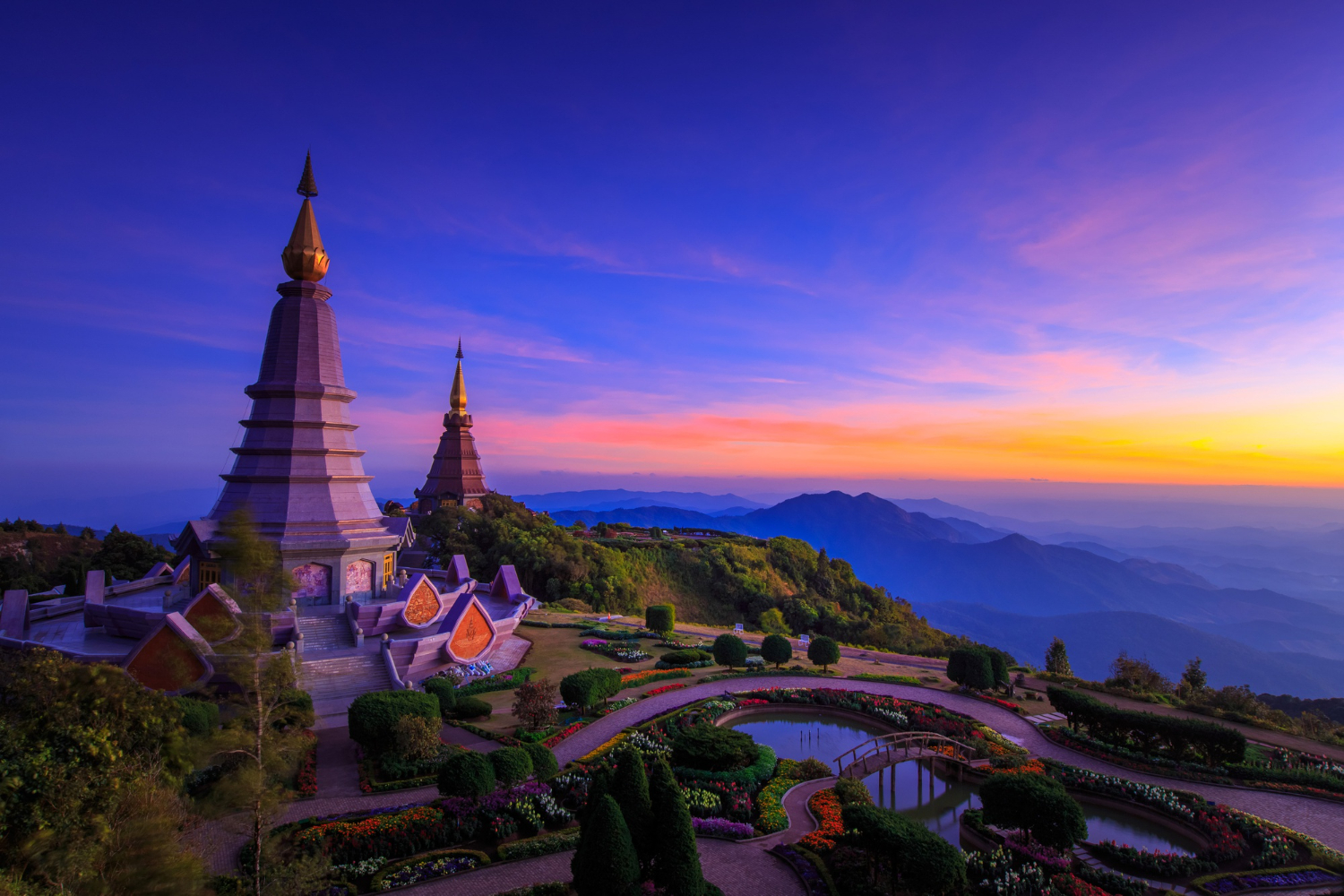
Their first day introduces them to Thai culture and the rhythm of life in the region. Students visit the sacred Doi Suthep area, taking in mountain views and temple spaces that hold deep cultural and spiritual significance. This opening experience encourages students to reflect on their first impressions of Thailand and begin considering the relationship between tradition, place, and identity.
A welcome dinner and evening gathering help students connect as a group and prepare for the experiences ahead.
Day 4: Food, Craftsmanship, and Everyday Culture
Students begin the day at a local market and cooking school, where they learn about Thai ingredients, cooking traditions, and the role food plays in daily life and cultural storytelling.
Hands-on cooking experiences allow students to prepare traditional dishes while learning about farming, herbs, and local food systems. Later, they visit a traditional umbrella-making village, where artisans continue centuries-old handicraft practices by hand.
This day highlights how craftsmanship and food traditions preserve cultural identity across generations.
Day 5: Artisan Heritage and Local Traditions
Students continue exploring Northern Thailand’s artistic traditions through a pottery workshop in Muang Kung Village, where they learn about the region’s ceramic heritage and create their own small pottery pieces.
In the afternoon, the group visits the famous Sticky Waterfalls, experiencing one of Thailand’s unique natural landscapes. The day concludes at a vibrant night market, where students can explore local foods, crafts, and the energy of urban Chiang Mai.
Together, these experiences encourage students to think about how tradition and modern life coexist in contemporary Thailand.
Day 6: Social Impact and Contemporary Thailand
Students visit Payap University’s Center for Social Impact, where they meet local practitioners working on social and economic initiatives across Thailand.
Through conversations and dialogue, students learn about social enterprise, economic development, and the challenges communities face today. Later, they travel to Chiang Rai and visit the White Temple, a striking contemporary landmark known for its symbolic art and modern interpretation of Buddhist themes.
This day encourages students to consider how tradition, creativity, and innovation interact in modern Thai society.
Day 7: Community Care and Spiritual Spaces
Students explore important cultural and spiritual landmarks in Chiang Rai, beginning with a visit to Wat Huay Pla Kang, a striking temple complex known for its towering white statue, intricate architecture, and panoramic views of the surrounding region.
As they explore the site, students learn about the temple’s history, symbolism, and role within contemporary Thai Buddhist culture. Discussions focus on the significance of temples as gathering spaces that reflect local identity, artistic expression, and spiritual tradition.
Later, students visit the Blue Temple, celebrated for its vivid blue interior, detailed artwork, and modern interpretation of traditional Buddhist design. These experiences encourage students to think about how sacred spaces preserve cultural values while continuing to evolve alongside modern society.
Day 8: Agriculture, Fair Trade, and Community Life
Students visit an organic coffee plantation operated in partnership with the Black Lahu community, where they learn about sustainable farming, fair trade, and local livelihoods.
Through conversations with community members, students gain insight into the relationship between agriculture, economics, and cultural identity in rural Thailand. Later, the group returns to Chiang Mai and experiences one of the city’s famous night markets, offering another opportunity to engage with local culture and entrepreneurship.
Day 9: Conservation, Creativity, and Reflection
On their final full day, students explore Thailand’s approach to elephant conservation through experiences in the Mae Sa Valley.
They learn about elephant care, conservation challenges, and sustainable tourism practices before participating in creative workshops that transform elephant waste fibers into handmade paper products. At Elephant Parade Land, students also discover how art and public awareness campaigns can support wildlife conservation efforts.
The day concludes with a farewell dinner and final reflection, giving students space to look back on the relationships, experiences, and ideas that shaped the journey.
Day 10: Journey Home
Students depart Thailand with new perspectives on culture, sustainability, and the many ways communities preserve tradition while adapting to change.
They return home having experienced Thailand through its food, crafts, landscapes, spiritual traditions, and local communities, carrying with them a deeper understanding of connection, resilience, and cultural exchange.
 Uncategorized